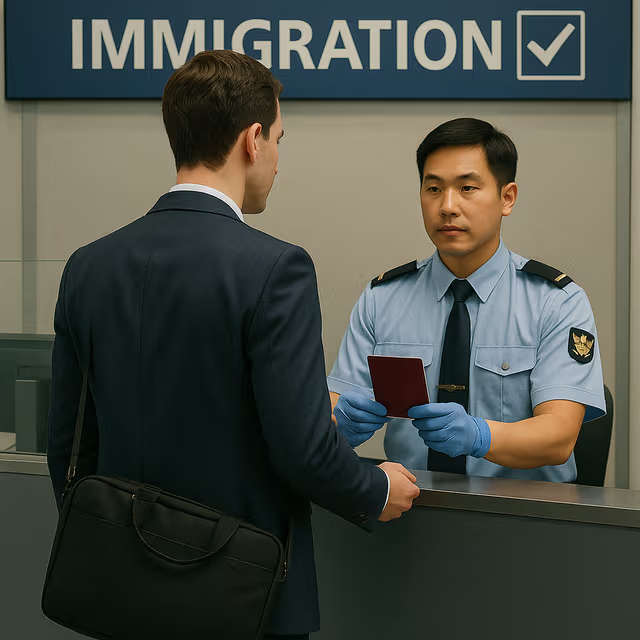
Violation of the Immigration Control Act — Did You Think It Could Never Happen to You?
Many people only realize later that even a small mistake—such as not fully understanding their stay conditions or missing a visa extension by just a few days—can make them subject to forced deportation or removal from Korea.
Once a deportation notice is issued, simply explaining your personal circumstances is usually not enough to change the outcome. If you miss the official deadline, the case can even lead to an entry ban, preventing you from returning to Korea.
Because these issues are often difficult to resolve alone, if you wish to continue living in Korea, it is strongly advised to seek help from a legal representative.
With proper legal support, you can explore possible defenses and prepare strategies to maintain your lawful stay.
Contents
1. Violation of the Immigration Control Act — In What Situations Can It Become a Problem?
2. What If a Deportation or Removal Order Has Been Issued?
3. Why Legal Representation Is Essential in Immigration Control Act Violations
4. A Real Case: A Chinese Spouse Who Entered Korea Under Another Person’s Identity Faced Deportation
5. Violations of the Immigration Control Act — The Timing of Your Response Can Change the Outcome
1. Violation of the Immigration Control Act — In What Situations Can It Become a Problem?
Foreigners in Korea must not engage in activities outside the scope permitted by their visa. However, in practice, even simple mistakes can fall under a violation of the Immigration Control Act, which often leads directly to forced deportation or removal from Korea.
Since even minor mistakes under the Immigration Control Act can quickly escalate into forced deportation, it is essential to seek legal remedies and evaluate possible strategies to maintain lawful residence as soon as a violation is confirmed.
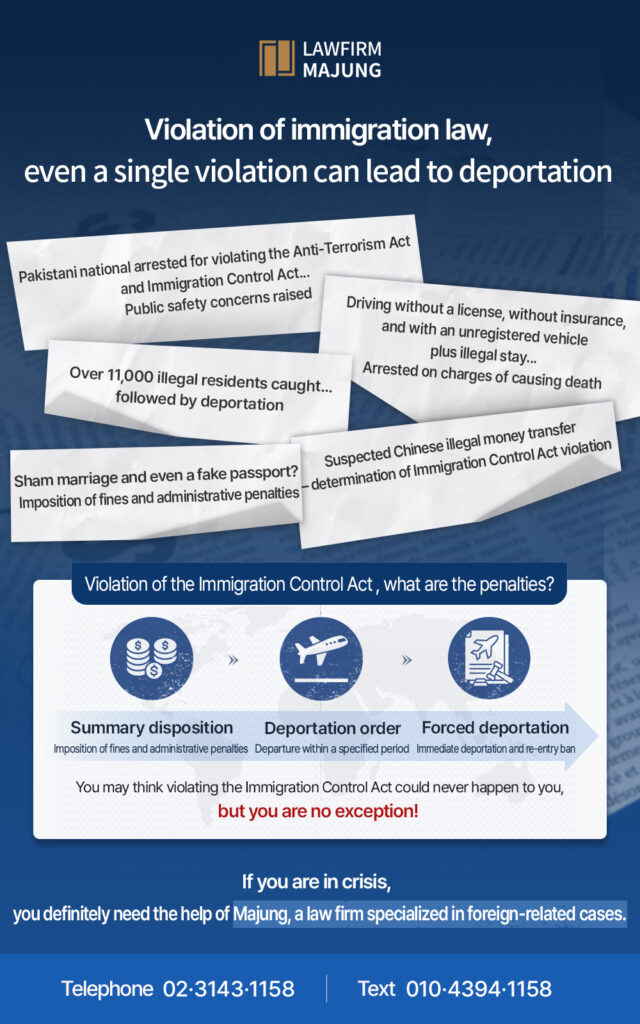
2. What If a Deportation or Removal Order Has Been Issued?
When a foreigner is found to have violated the Immigration Control Act, the immigration office may issue either a departure order or a forced deportation order.
Once deportation procedures are set in motion, the longer you wait, the fewer defense options remain.
Therefore, building a strategy immediately after receiving the official notice is the most practical way to respond .
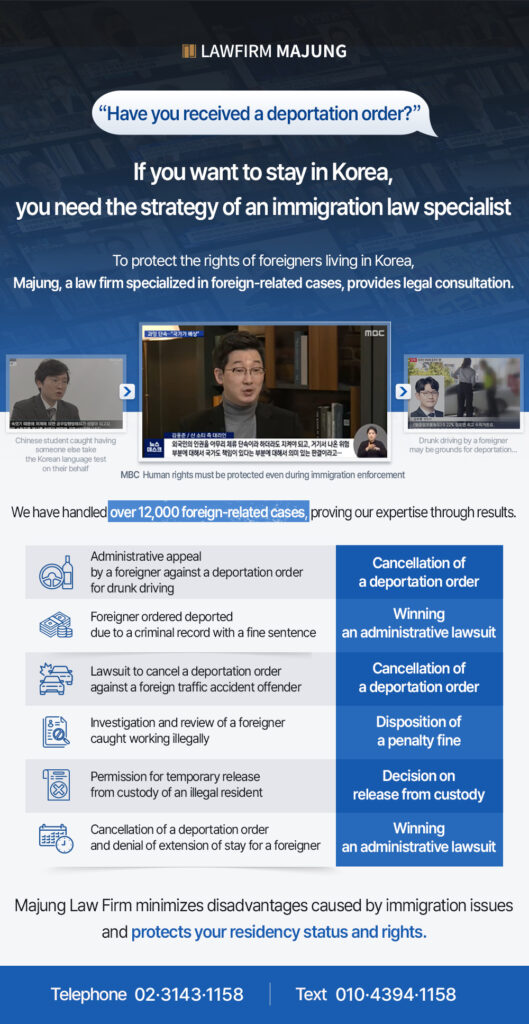
3. Why Legal Representation Is Essential in Immigration Control Act Violations
After receiving a forced deportation or removal order, simply claiming that the situation feels unfair rarely changes the outcome.
Deportation measures under the Immigration Control Act are not just a matter of paperwork. In reality, they require careful consideration of the severity of the violation, individual circumstances of stay, and fairness in applying the law.
At the stage of administrative litigation, effective relief is only possible with the support of a legal representative, who can logically challenge the decision by pointing out procedural flaws, excessive punishment, or humanitarian grounds for residence.
The way you begin your response can make a significant difference in whether you can continue residing in Korea.
If you have received a deportation notice, it is the right time to seek expert legal assistance and establish a step-by-step defense strategy.
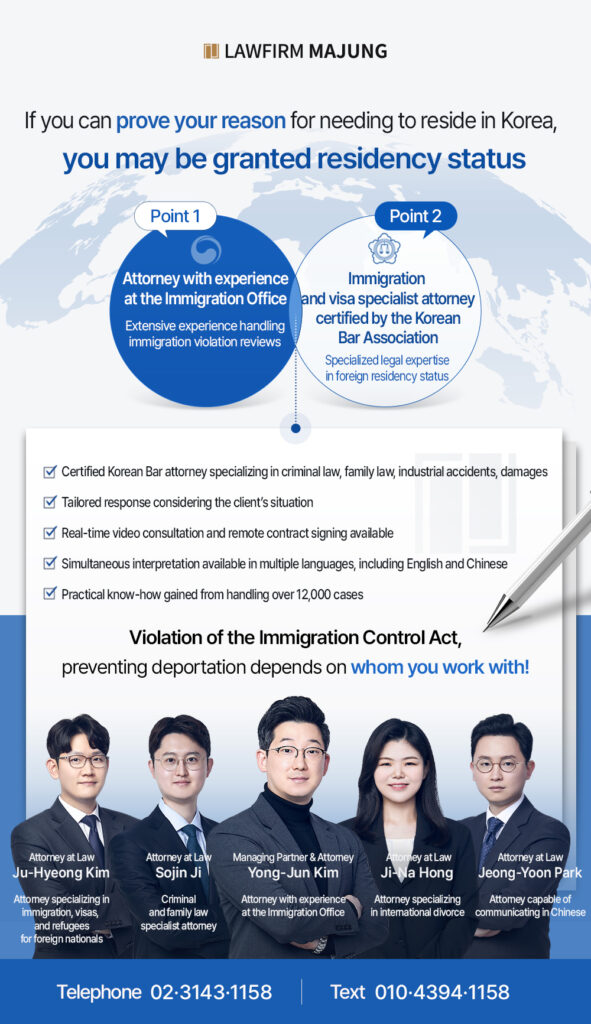
4. A Real Case: A Chinese Spouse Who Entered Korea Under Another Person’s Identity Faced Deportation
The client had been living with a Chinese spouse for over 10 years, raising two children together.
However, immigration authorities recently discovered that the spouse had a prior record of forced deportation and had re-entered Korea under another person’s identity, even registering the marriage under that false identity.
As a result, the spouse’s visa was immediately canceled for violation of the Immigration Control Act, and a forced deportation order was issued—placing the entire family at risk of being torn apart .
With the help of a legal representative, the client focused not only on the past violation but also on proving the genuine family life and parental responsibilities that had existed for years.
Special emphasis was placed on the fact that the spouse had been the primary provider and caregiver, and that deportation would cause serious harm to the children’s stable upbringing and overall well-being.
The forced deportation order was withdrawn, allowing the spouse to remain in Korea. The children’s legal status was also corrected, and the family was able to restore their daily life and stability.
5. Violations of the Immigration Control Act — The Timing of Your Response Can Change the Outcome
Even if a violation of the Immigration Control Act arises from a simple mistake, it can still result in a forced deportation or removal order.
However, not every violation immediately leads to deportation—depending on the case, it may be possible to restore or change the visa status.
What truly matters is taking action from the moment you receive the deportation notice, not after the decision has been finalized. Missing this critical window can severely limit your options for administrative litigation or lifting an entry ban.
A legal representative with practical experience at the immigration office can provide real, effective support at every stage—whether it’s prosecutorial review, lawsuits to cancel deportation orders, applications for temporary release from detention, or petitions to lift entry bans. Facing such complex procedures alone means navigating too many uncertain choices.
The safest approach is to work with an immigration law expert who can provide clear legal guidance and strategic solutions based on experience with deportation cases.
Multilingual consultation available in English and Chinese.
Professional interpreters assist from the first consultation to the conclusion of the case.
Offices in Seoul, Daejeon, Busan, Daegu, and Gwangju.
Don’t face the legal system alone. Let Majung fight for you!