※ Majung Law Firm’s Foreigner Center is dedicated to protecting the rights of foreigners residing in Korea.
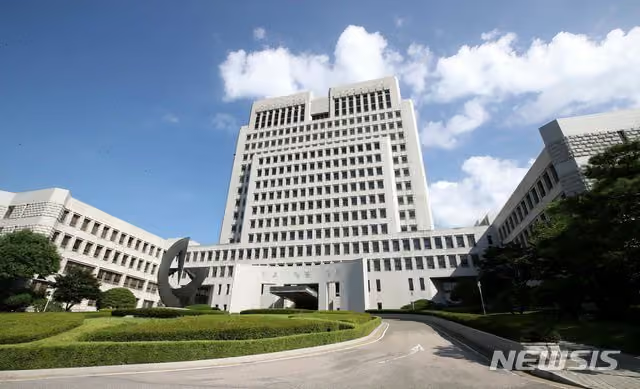
The court has ruled that issuing a deportation order to a minor Chinese-Korean for simple involvement in a voice phishing crime is unlawful. The decision emphasized the need for careful consideration of specific circumstances such as age and post-crime conditions when issuing deportation orders.
According to legal sources on the 14th, Judge Choi Ki-won of the Seoul Administrative Court ruled in favor of the plaintiff in a lawsuit filed by 17-year-old Chinese-Korean A against the Seoul Immigration Office, seeking to cancel the deportation order and refusal to extend his stay.
Report Deceived by a Voice Phishing Organization at Age 14
According to the ruling, A, born in China in 2005, was raised by his maternal grandparents. His mother, a Chinese-Korean, moved to South Korea for economic reasons when A was three, and his Chinese father lost contact. His mother divorced in 2013 and remarried a South Korean man. In 2018, after the death of his grandparents, A moved to South Korea to join his only remaining family, his mother.
The year after his arrival, A was lured by a voice phishing organization that promised him a reward for simply picking up money left at a doorstep. The organization deceived elderly victims by claiming their personal information was leaked and instructed them to leave money at their doors for safekeeping. As a money collector for this scam, A took 10.24 million won left by a 70-year-old woman in May 2020. Eventually caught, A was sent to juvenile court and received protective disposition in October 2020.
Under the current Immigration Control Act, individuals deemed a threat to the interests or public safety of the Republic of Korea can be subjected to deportation or departure orders. Generally, the immigration authorities apply this to foreigners with criminal convictions.
In May last year, the Seoul Immigration Office issued a deportation order to A, citing his involvement in voice phishing. A’s legal representatives filed a lawsuit, arguing that he deeply regretted his actions and had no guardians in China.
Court Cancels Deportation Order, Emphasizes Specific Considerations
The court highlighted, “While the state has the inherent sovereign right to deport undesirable foreigners, determining whether someone poses a threat to public safety or social order must consider specific, individual circumstances such as age, nature of the crime, frequency, and post-crime conditions.”
The court considered several factors: A was only 14 at the time of the crime, his involvement was limited to a single incident, and he has since been making efforts to integrate into Korean society through studying the language and participating in volunteer activities. The court concluded, “It is difficult to assert that A will harm the interests, public safety, economic order, or social order of the Republic of Korea in the future.”
The court also noted that most of A’s relatives live in South Korea. “If A is deported to China, he, as a 16-year-old minor, will likely have no one to care for him,” the court stated. “Although his mother could accompany him, she would lose her social and economic foundations established over the past 14 years in Korea.”
commented, “In most cases, involvement in voice phishing, which harms many ordinary people, results in deportation orders, and courts generally uphold them. However, this case is exceptional due to A’s minor status and lack of guardians in China, highlighting the court’s consideration of humanitarian aspects.”
Majung provides legal consultations for foreigners living in Korea who need legal assistance. Please contact us at the number below for more detailed consultations.
- Majung Law Firm Foreigner Center: 02-3143-1158
- Online Consultation: https://majungforeign.kr/contact/?lang=en