
Which Law Firm Should I Visit for a Consultation in English?
Life in Korea may seem stable, but a single administrative issue can significantly change its direction.
In particular, when people unexpectedly receive an immigration-related decision, many find it difficult to understand why the outcome occurred or what they should do next. This is not just a procedural issue—it is directly connected to whether they can maintain the life they have built so far.
The problem is that in many cases, people only begin to consider how to respond after the decision has already been made. Therefore, in such situations, the starting point is not just trying to change the outcome, but first understanding the criteria and reasoning behind the decision.
1. What Criteria Are Used to Determine Deportation of Foreign Nationals?
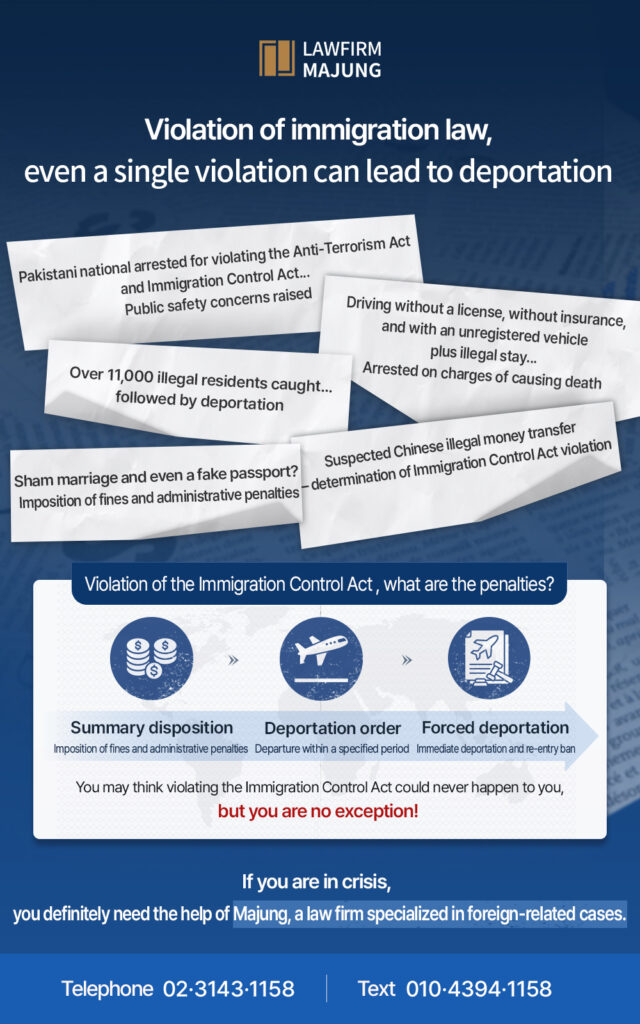
Deportation of foreign nationals is not determined based on a single act alone. Instead, it is decided through a comprehensive review of multiple factors. One of the key criteria is whether there has been a violation of the Immigration Control Act.
All of these may constitute violations of the Immigration Control Act, and depending on the severity of the case, they may lead to deportation. If criminal issues are also involved, the situation becomes even more complex. Even cases that end with a simple fine can still influence deportation decisions, depending on factors such as repetition or the nature of the offense.
2. In What Situations Can a Departure Order Be Revoked?
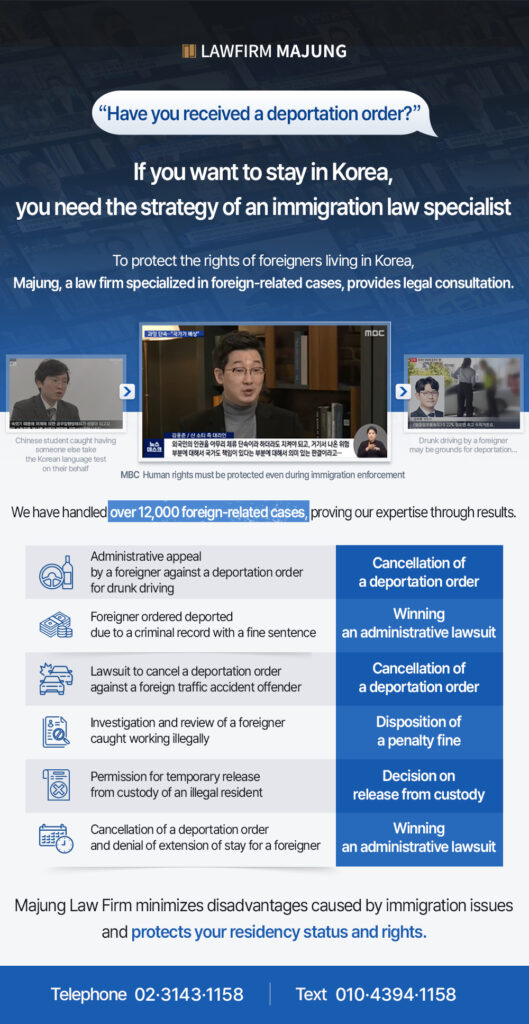
Receiving a deportation notice does not mean that all cases are handled in the same way. If certain conditions are met, it is possible to challenge the decision through a procedure to revoke a departure order. In this process, objective evidence is more important than simple assertions.
These factors need to be clearly and concretely organized in order to increase the possibility of revoking a departure order. In such situations, rather than responding emotionally, it is essential to take a logical approach aligned with the decision-making criteria of the administrative authorities.
3. Why Is Time Management Important in Deportation Procedures?
Deportation procedures for foreign nationals often proceed more quickly than expected. Since there are strict deadlines for response after notification, missing them can significantly limit the available options.
It is not enough to simply organize the facts—what is needed is a structured approach that also considers potential administrative actions that may follow. In deportation situations, submitting appropriate materials at the right time and responding in accordance with the procedure can, in many cases, lead to a different outcome.
4. Differences in Response Strategies That Actually Change Outcomes
Even in cases involving the same type of Immigration Control Act violation, the outcome can vary significantly. In most cases, the difference comes down to how the situation was handled. Looking at cases where deportation was mitigated to a departure order, or where a departure order was later revoked, they tend to share the following characteristics:
When these elements are prepared in a systematic way, there is a greater possibility of mitigating the outcome of deportation for foreign nationals.
5. Key Points to Understand When Responding to Immigration Control Act Violations
Deportation of foreign nationals is not determined solely based on whether a legal violation occurred. Even if there has been a violation of the Immigration Control Act, the following factors are considered together:
Therefore, in responding to such situations, it is not enough to simply provide an explanation. It is important to present, in a structured way, why continued residence should be allowed. The same applies to revoking a departure order—it is essential to understand the administrative authority’s decision-making criteria and prepare supporting materials accordingly.
6. Deportation of Foreign Nationals Is Not Just a Simple Administrative Action
In particular, when criminal issues and immigration matters are interconnected, the outcome cannot be considered separately. It is therefore necessary to take an approach that considers the entire process from the very beginning.
Ultimately, deportation issues for foreign nationals are not simply about accepting the decision. How the response strategy is structured can significantly affect the outcome. If you are facing such concerns, it may be helpful to consult legal professionals and review the available response options based on the specific circumstances of your case.