
When people suddenly receive notice of a forced departure order, many feel overwhelmed and unsure of what to do first. In particular, terms such as a departure order, an exit order, and forced removal may sound similar, but they can lead to completely different legal outcomes in practice. If you respond without fully understanding these differences, it may result in an unfavorable outcome—and in many cases, the forced removal of the foreign national may ultimately become final.
1. Key factors that lead to forced removal of a foreign national
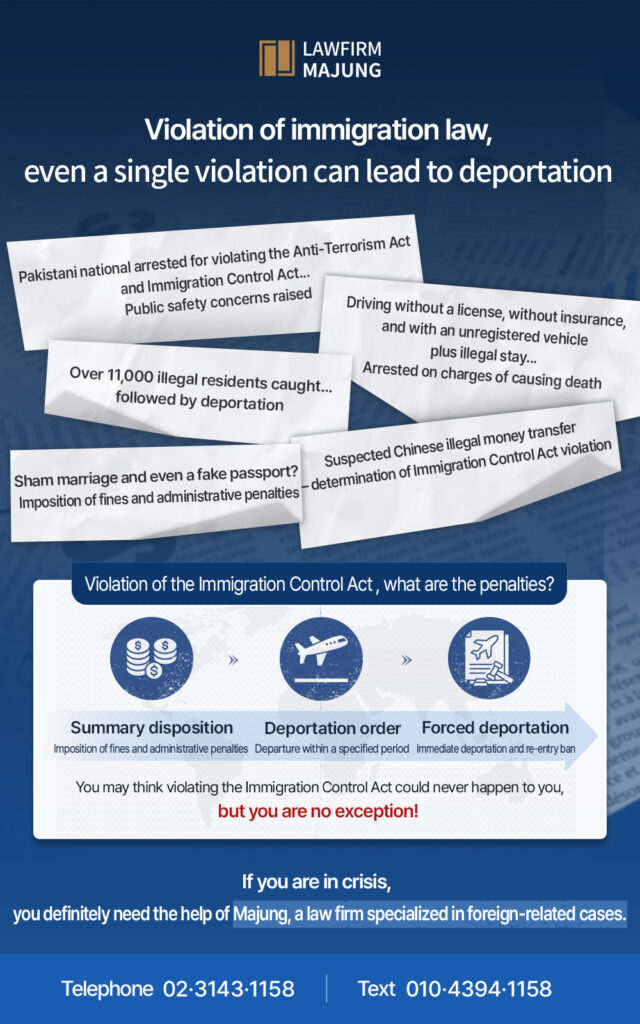
Forced removal of a foreign national is not simply an administrative measure—it is a serious decision declaring that the individual will no longer be permitted to remain in the country. Typical situations that may lead to forced removal include:
- overstaying the permitted period of stay
- continued illegal residence
- involvement in criminal activity
- receiving fines above a certain level
Depending on the seriousness of the case, the matter may sometimes be adjusted to a departure order, while more severe situations can lead to forced deportation. In particular, if repeated violations or criminal involvement are confirmed, there is a much higher possibility that authorities will impose a stronger form of forced removal rather than a simple departure order.
2. The difference between a departure order and an exit order for foreign nationals
One area that many people find confusing is the difference between a departure order and a forced removal order for foreign nationals. A departure order is considered a relatively lenient measure because it gives the individual an opportunity to leave the country voluntarily within a specified period. In contrast, a removal order or forced deportation involves compulsory removal and may also result in restrictions on future re-entry. In simple terms, the differences can be understood as follows:
3. Possible response strategies after receiving a forced removal notice
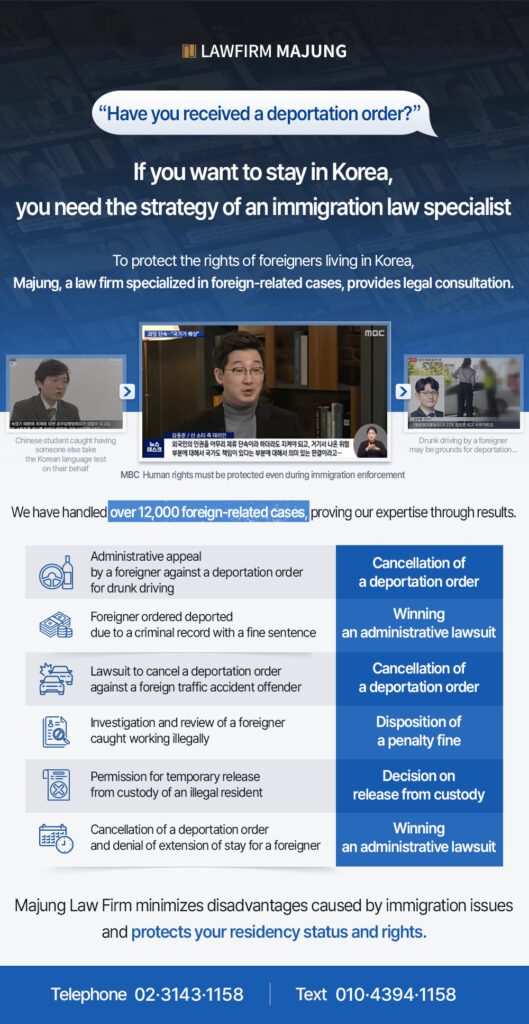
Receiving a forced removal notice does not necessarily mean that you must simply accept the decision without challenge. There are several possible response options, including:
4. Using temporary release from detention as a strategy to gain time
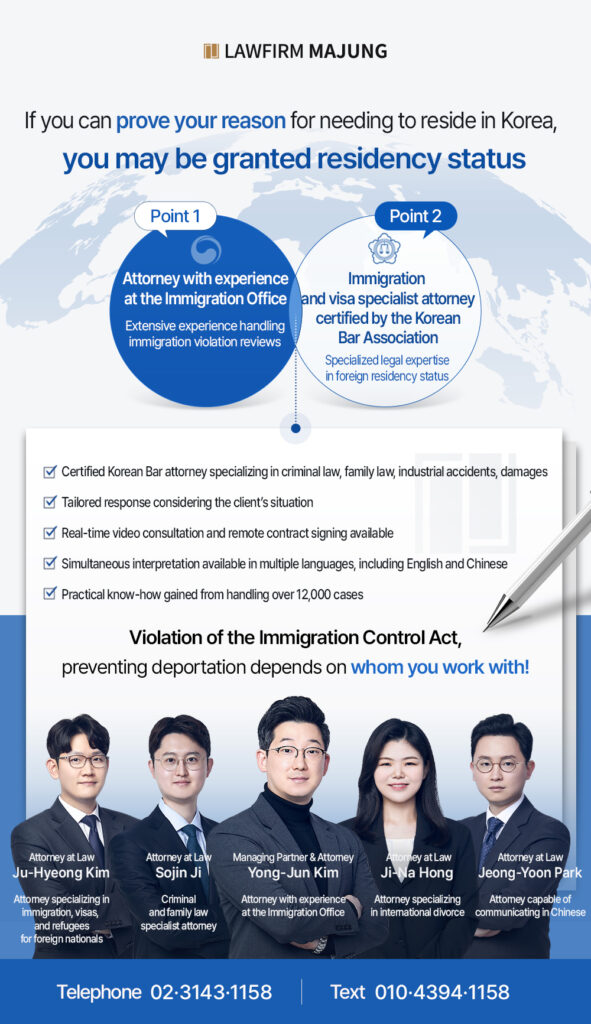
If a person has already been detained at an immigration holding facility as a subject of forced removal, it may be possible to use the system of temporary release from detention. This system allows the temporary suspension of forced deportation and permits the individual to remain outside the facility if certain conditions are met.
5. The key factors that can actually change the outcome
Even in cases involving the same type of forced removal issue, the outcome can vary significantly. The key factors that make the difference include:
When these factors are presented persuasively, the outcome may change, such as:
In other words, a well-prepared legal response can significantly affect the final result.
Multilingual consultation available in English and Chinese.
Professional interpreters assist from the first consultation to the conclusion of the case.
Offices in Seoul, Daejeon, Busan, Daegu, and Gwangju
Don’t face the legal system alone. Let Majung fight for you!