
Criminal Procedure Alone Is Not Enough in Foreign National Cases
1. Choosing the Right Response Strategy
As drug-related issues involving foreign students have become increasingly discussed within educational settings, anxiety among international students facing unexpected legal risks has also grown.
Even if the situation began from simple curiosity, once it is classified as a
foreign student drug case,
legal procedures in Korea are generally handled very strictly.
As a result, even a single mistake or poor judgment may rapidly lead to discussions of imprisonment.
Additionally, separate from criminal punishment,
deportation procedures may also begin simultaneously,
potentially affecting not only the student’s ability to continue studying in Korea but also future visa issuance.
For this reason,
the choice of legal strategy can significantly affect the outcome.
Especially during the initial statement stage, decisions may strongly influence the direction of the case.

2. Selecting Necessary Evidence
In foreign student drug cases, the legal standards vary greatly depending on whether the issue involves
drug use, possession, or narcotics-related offenses.
Without understanding these distinctions, individuals often make statements that place themselves at a disadvantage.
Even first-time offenders may face possible imprisonment where the circumstances and evidence are considered serious.
This may create difficulties for future re-entry into Korea.
To reduce these risks, it is important to establish a
clear and strategic response from the earliest stage of the investigation.
Repeated statements made without proper judgment or emotional reactions during questioning may worsen the situation.
Ultimately, professional legal assistance is often necessary to
accurately understand the nature of the case, identify important evidence, and analyze the intent behind investigative questioning.
3. Not Limited to Criminal Proceedings Alone
In practice, foreign student drug cases rarely end as simple criminal matters.
They often involve multiple interconnected issues such as
immigration control, visa classification, and the ability to continue academic studies.
For example, even if an individual admits the allegations during the investigation, the outcome may still vary greatly depending on the surrounding circumstances, attitude during proceedings, and rehabilitation efforts.
There are also cases where foreign nationals experience disadvantages because of communication difficulties or a lack of understanding regarding Korean legal procedures.
Therefore, it is important to seek legal assistance from professionals who understand both criminal law and immigration regulations and who can establish an
integrated legal strategy.
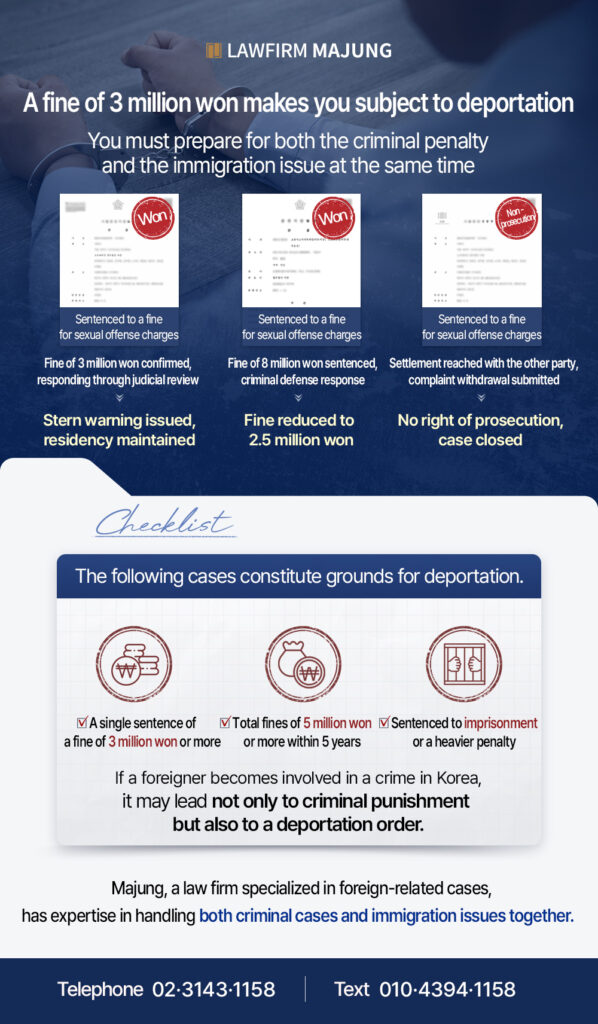
4. Accurate Analysis of the Facts Is Critical
One of the biggest dangers in foreign student drug cases is that
failure during the initial response stage may quickly lead to discussions of imprisonment.
Investigative authorities often treat cases more seriously once evidence has been rapidly secured.
For foreign nationals, this may become even more severe because immigration and deportation regulations are considered together with the criminal allegations.
On the other hand, where the right legal strategy is used, some cases involving temporary or one-time drug use may still receive leniency.
Rather than dismissing the matter as a simple mistake and responding passively,
it is important to
minimize unnecessary legal risks through accurate factual analysis and strategic legal preparation.
5. Looking at the Immigration Process
In one actual case, an international student attending a Korean university became involved in a drug investigation after temporarily using drugs at a social gathering following encouragement from acquaintances.
During the initial investigation, the student stated that it was a one-time act arising from curiosity.
However, investigative authorities viewed the matter seriously enough to discuss the possibility of imprisonment.
The case became more difficult due to poorly handled initial statements and a lack of understanding regarding legal procedures.
Later, legal professionals became involved and
reorganized the evidence, clarified the meaning of earlier statements, and prepared structured rehabilitation and academic continuation plans.
As a result, the court ultimately considered leniency, and immigration authorities also responded with greater flexibility.
This outcome was made possible through
systematic preparation and professional legal analysis.

6. Through Professional Legal Consultation
Foreign student drug cases may arise from what appears to be a simple mistake,
but they can still lead to
criminal punishment, imprisonment, and deportation proceedings.
For this reason, understanding the situation accurately and selecting a rational legal response strategy is extremely important.
Therefore, it is advisable to establish a systematic legal strategy with assistance from professionals experienced in both criminal and immigration matters.
Accurately analyzing the nature of the case, minimizing unfavorable factors, and maximizing the possibility of leniency often depends on
selecting experienced legal professionals familiar with this field.
If you are currently facing these difficulties, it is strongly recommended that you seek professional legal consultation rather than attempting to handle the matter alone.