
The moment many foreign nationals suddenly
receive notice of deportation, they often become confused and do not know what to do first
.
In particular, terms such as
foreign national removal orders, departure orders, and forced deportation
may sound similar, but they can actually lead to completely different legal outcomes.
If a person responds without understanding these differences, it may result in unfavorable consequences, and in many cases,
forced deportation
may ultimately become finalized.
For this reason,
accurate distinction and strategic response from the earliest stage are extremely important
.
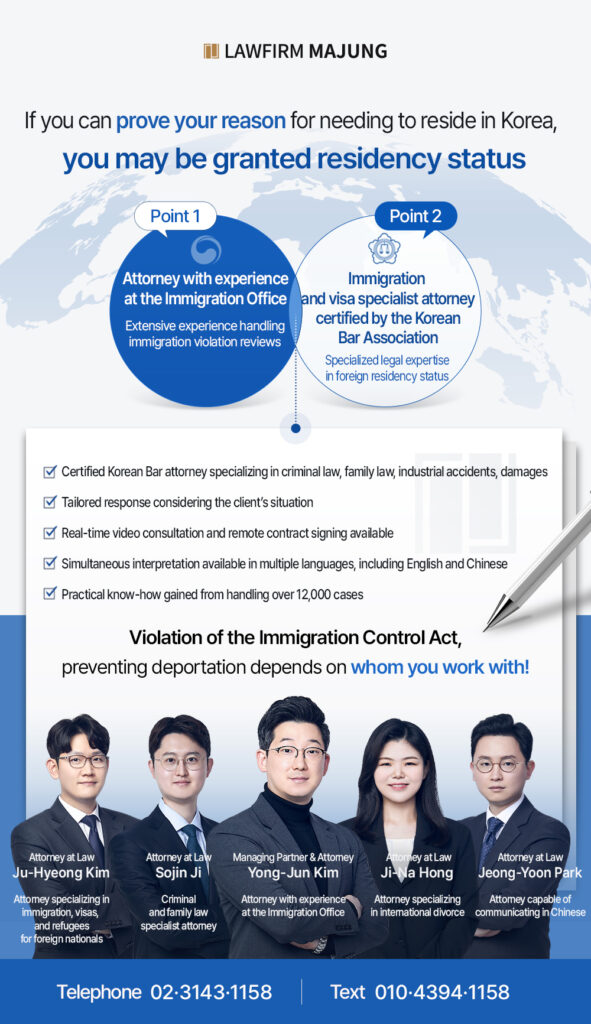
A Team Built on Practical Immigration Office Experience
2. Difference Between Removal Orders and Departure Orders
3. Possible Responses After Receiving Deportation Notice
4. Securing Time Through Temporary Release from Detention
5. Key Factors That Can Change the Outcome
6. How Law Firm Majung Handles Cases
1. Main Grounds for Foreign National Deportation
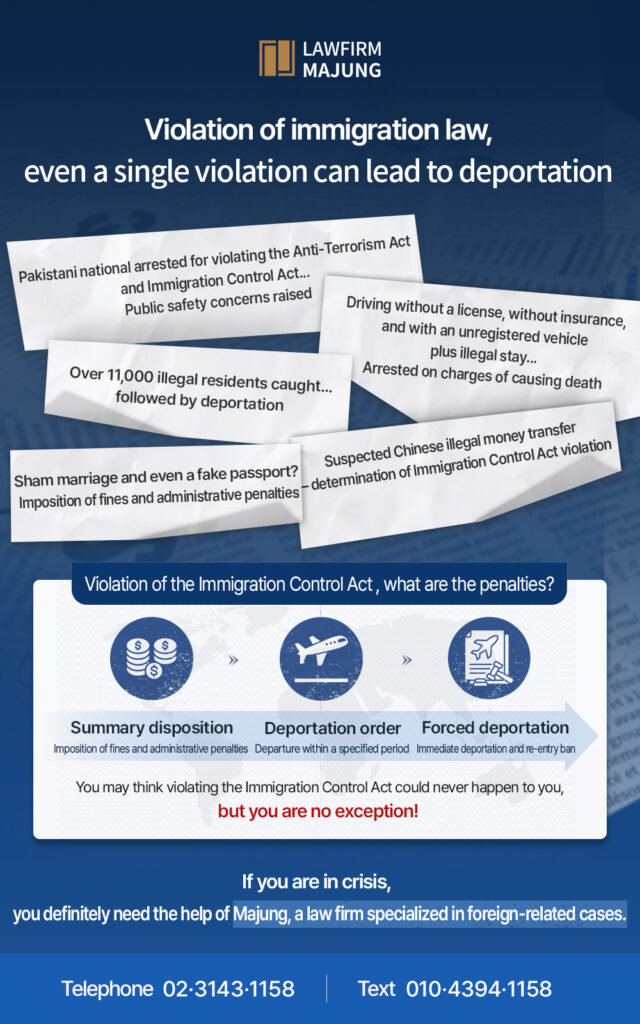
Deportation of a foreign national
is not a simple administrative action.
It is a serious measure indicating that continued stay in Korea will no longer be permitted.
✅ Continuing unlawful stay
✅ Involvement in criminal activity
✅ Criminal fines above a certain level
Depending on the seriousness of the case, the matter may sometimes be adjusted to a departure order, while more serious situations may lead to forced deportation.
In particular, where repeated violations or criminal involvement are identified, there is a higher likelihood of receiving a stronger form of action than
notice of deportation
,
such as
forced deportation
.
2. Difference Between Removal Orders and Departure Orders
Many people confuse
removal orders
and
departure orders
.
A
departure order
is a relatively lighter measure that allows the individual an opportunity to voluntarily leave Korea within a designated period.
On the other hand,
removal orders
and
forced deportation
involve compulsory removal from Korea and may also lead to future re-entry restrictions.
If these differences are not properly understood, an individual may miss the proper response timing and quickly become subject to forced deportation .
3. Possible Responses After Receiving Deportation Notice
Receiving
notice of deportation
does not always mean the individual must simply accept the decision without challenge.
Possible response options include
Through these procedures, it may be possible to delay or alter the final deportation outcome.
4. Securing Time Through Temporary Release from Detention
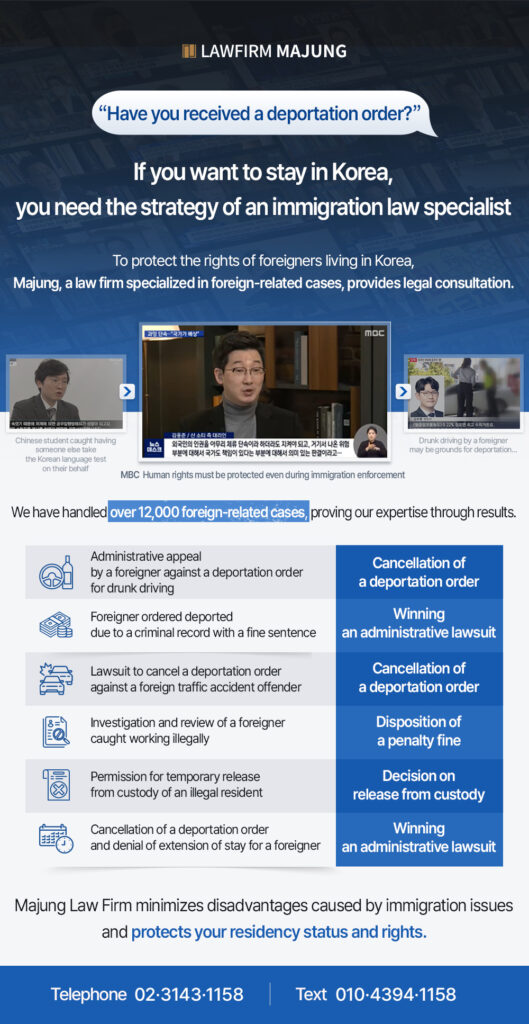
If the individual has already been detained in an immigration detention facility as a deportation subject, it may be possible to use the
“temporary release from protection”
system.
Under this system, where certain conditions are satisfied,
forced deportation
may be temporarily suspended, allowing the person to remain outside the detention facility.
✔ Prepare a lawsuit canceling the removal order
✔ secure evidence supporting reasons for continued stay
However, temporary release is not easily granted.
Careful preparation is required, and changing the overall
deportation process
through this strategy is often critical.
5. Key Factors That Can Change the Outcome
Even in similar
deportation
cases, outcomes may vary significantly.
Important factors influencing the result include
✅ Family and social ties
✅ Circumstances and intent relating to the offense
✅ Remorse and likelihood of repeat offenses
If these factors are persuasively organized
→ Forced deportation may be reduced to a departure order
→ Removal orders may potentially be mitigated
As a result, the overall outcome may change considerably.
Foreign national deportation does not simply mean departure from Korea.
It is a major legal decision affecting future re-entry, immigration opportunities, and long-term residency plans.
For this reason, accurately understanding the differences between
removal orders,
departure orders,
and
forced deportation
is essential to avoiding unfavorable consequences.
6. How Law Firm Majung Handles Cases
The later the initial response begins, the fewer legal options remain, increasing the likelihood of
forced deportation
.
On the other hand, when approached strategically from the beginning, it may become possible to reduce penalties, adjust the departure method, and secure opportunities to maintain legal stay in Korea.
Professional interpreters assist from the first consultation to the conclusion of the case.
Offices in Seoul, Daejeon, Busan, Daegu, and Gwangju.
Don’t face the legal system alone. Let Majung fight for you!