Changing one's immigration status is one of the most important procedures to consider after divorcing while holding a marriage visa. Whether the divorce is uncontested or contested, maintaining lawful status in Korea depends largely on the strategy used when applying for a change of immigration status.
A change of immigration status refers to the immigration procedure through which a foreign national changes from one visa category to another due to changes in circumstances such as marriage, employment, or family relationships. In particular, after the termination of a marriage, changing immigration status often becomes the deciding factor in whether a foreign national may continue residing in Korea.
1. Understanding the Basics of Changing Immigration Status
A change of immigration status is a procedure that allows a foreign national to maintain lawful residence by demonstrating a new legal basis for staying in Korea after the original basis has ended. Following a divorce on a marriage visa, this issue is directly connected to post-divorce visa matters. The review process may differ depending on whether the divorce is uncontested or proceeds through litigation.
During the review, immigration authorities place greater importance on the necessity of the individual's continued stay in Korea than on the fact of divorce itself.
In practice, immigration specialists generally consider factors such as:
A change of immigration status also serves as an important turning point in determining whether deportation may become an issue.
For this reason, it is advisable to establish an immigration strategy from the earliest stage.
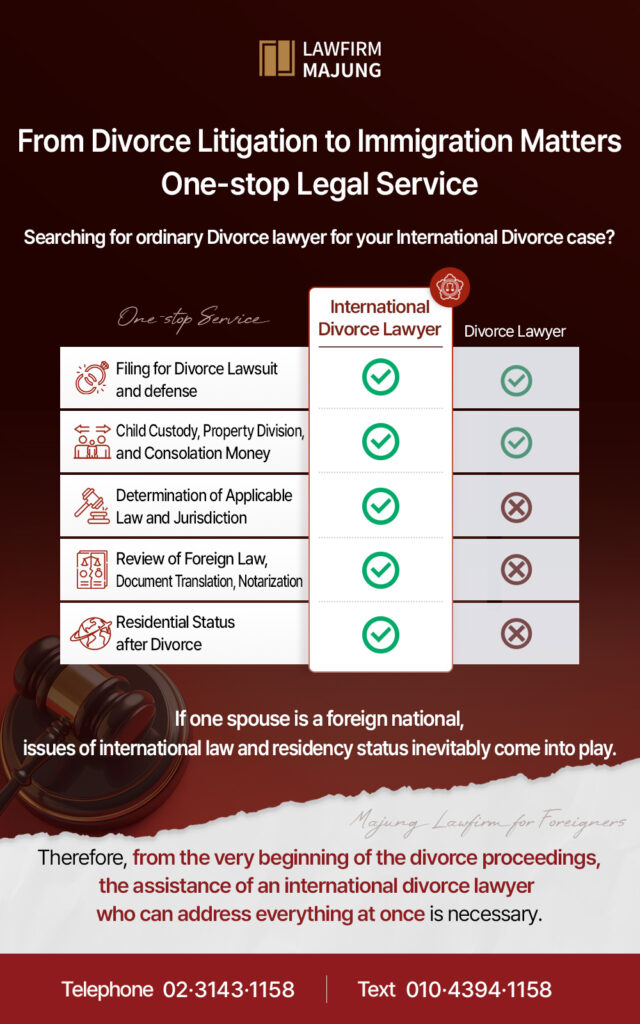
2. How Is Eligibility Determined?
Whether a change of immigration status is approved depends largely on administrative discretion rather than rigid legal requirements.
In practice, immigration authorities generally consider the following factors
In particular, whether the foreign spouse is considered the party without fault is an important factor when reviewing post-divorce immigration status. This is one reason why divorce litigation may sometimes be more appropriate than an uncontested divorce.
These same factors may also directly influence whether deportation is considered.
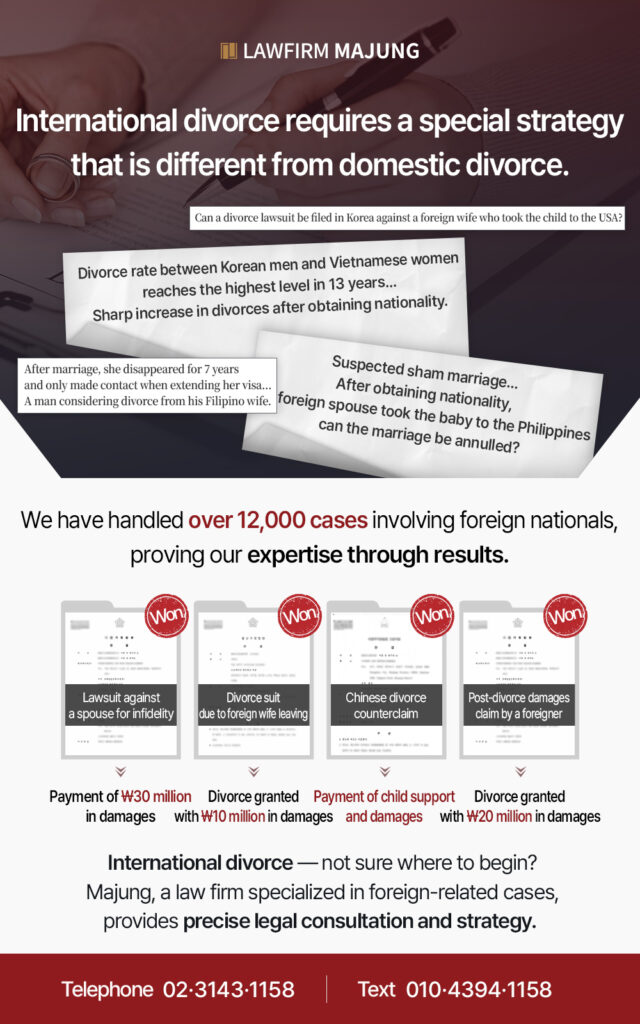
3. Types of Immigration Status Changes
There are several possible pathways for changing immigration status after divorce on a marriage visa.
Common examples include:
Among these, residence based on raising a Korean-national child is often the most significant. Even after an uncontested divorce, a foreign national who can demonstrate that they are actually raising the child may have a greater possibility of maintaining lawful residence.
| Category | Requirements | Key Consideration |
|---|---|---|
| Child-rearing | Raising a Korean-national child | High possibility of maintaining status |
| Employment Visa | Stable employment and income | Financial stability is important |
| Other Long-Term Residence | Long-term residence in Korea | Subject to stricter review |
At this stage, immigration professionals carefully determine the most appropriate strategy for changing immigration status.
4. How Does Child Custody Affect Immigration Status?
Where children are involved, the review process changes significantly. In divorce litigation, whether the foreign parent obtains custody is directly related to the possibility of maintaining lawful immigration status.
To avoid deportation, what matters most is not merely legal custody but actual child-rearing. Immigration authorities commonly review:
For this reason, divorce litigation is often necessary when child custody is involved.
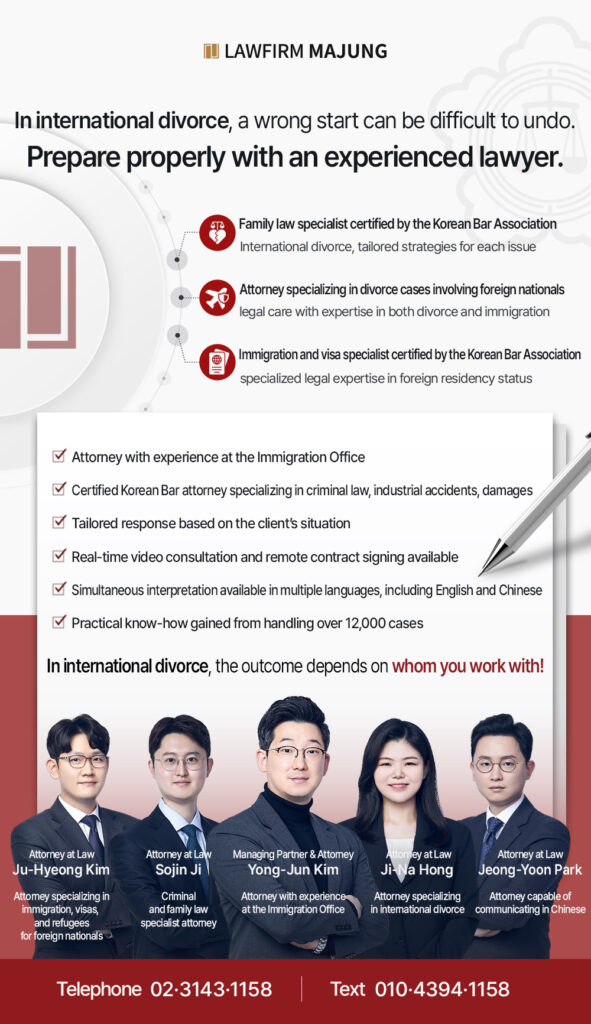
5. Divorce Litigation and Immigration Status
Changing immigration status is closely connected to divorce litigation. Although an uncontested divorce is generally faster, it may sometimes provide less support when demonstrating the need to remain in Korea.
Divorce litigation generally proceeds through the following stages:
Throughout this process, an immigration strategy should be developed alongside the divorce proceedings.
Issues such as post-divorce visa status, the possibility of deportation, and child custody should all be carefully considered together.
Professional legal advice is particularly recommended if:
A change of immigration status is not simply an administrative procedure. It is a matter that directly affects both family relationships and long-term stability in Korea. For this reason, establishing the right strategy from the very beginning is essential.
Multilingual consultation available in English and Chinese.
Professional interpreters assist from the first consultation to the conclusion of the case.
Offices in Seoul, Daejeon, Busan, Daegu, and Gwangju
Don’t face the legal system alone. Let Majung fight for you!