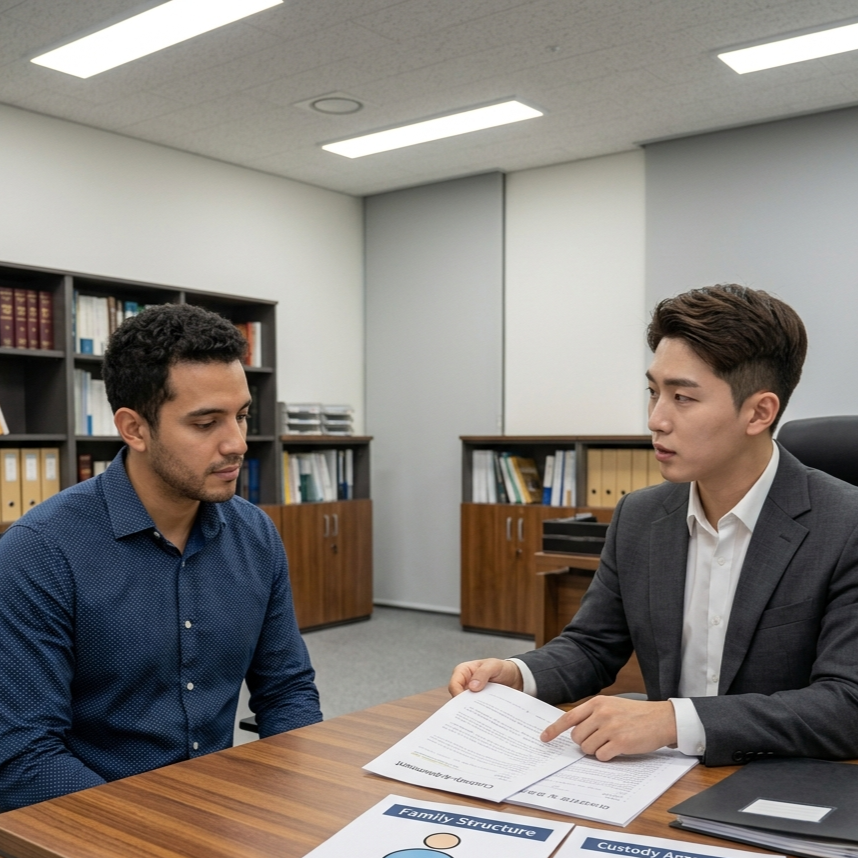
International marriage brings together people from different cultures and backgrounds to build a family. However, unexpected conflicts sometimes lead couples to consider divorce.
If your foreign spouse suddenly leaves home or completely loses contact with you, it can be difficult to know where to begin.
Moreover, divorce is not simply about ending the marriage. If children are involved, child custody must also be addressed. If the spouses own joint property, property division should likewise be carefully reviewed.
1. Divorce Is Still Possible Even If Your Foreign Spouse Has Disappeared
Many people believe that an international divorce cannot proceed if they are unable to contact their spouse.
However, even if your spouse's address is unknown or communication has been lost for an extended period, legal proceedings may continue through procedures provided by law.
It is important to prepare objective evidence showing:
The documents and procedures required may also differ depending on whether your foreign spouse has returned to their home country or remains in Korea. For this reason, establishing the facts accurately from the beginning is essential.
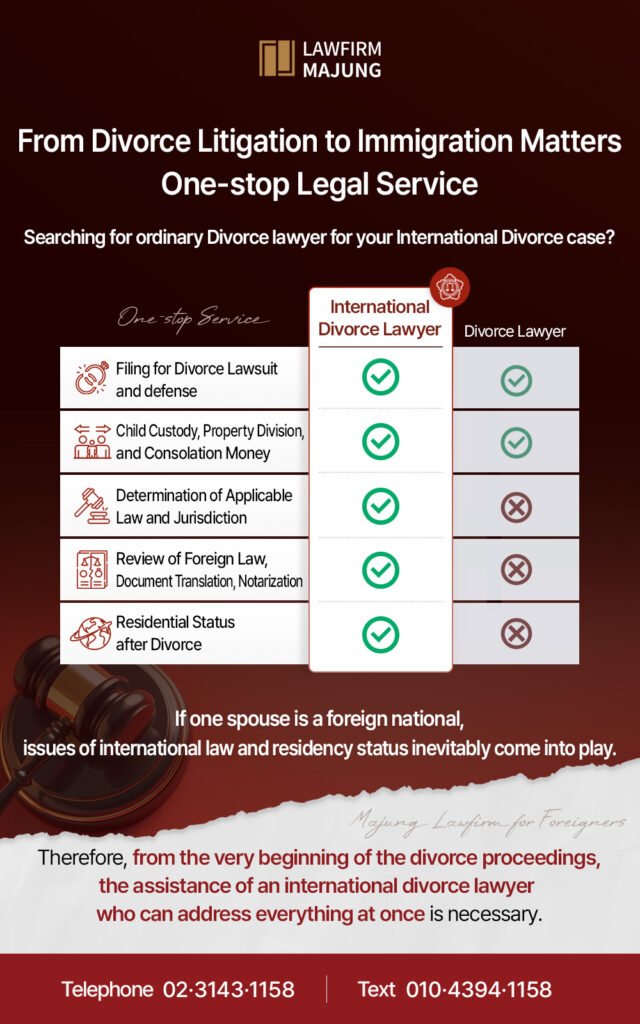
2. International Divorce Requires Consideration of Cross-Border Legal Issues
Unlike ordinary divorce cases, international divorce often requires determining which country's laws apply.
The applicable law and the competent court may vary depending on:
Because international elements are involved, it is important to consider not only the divorce itself but also immigration status, children, and other related issues.
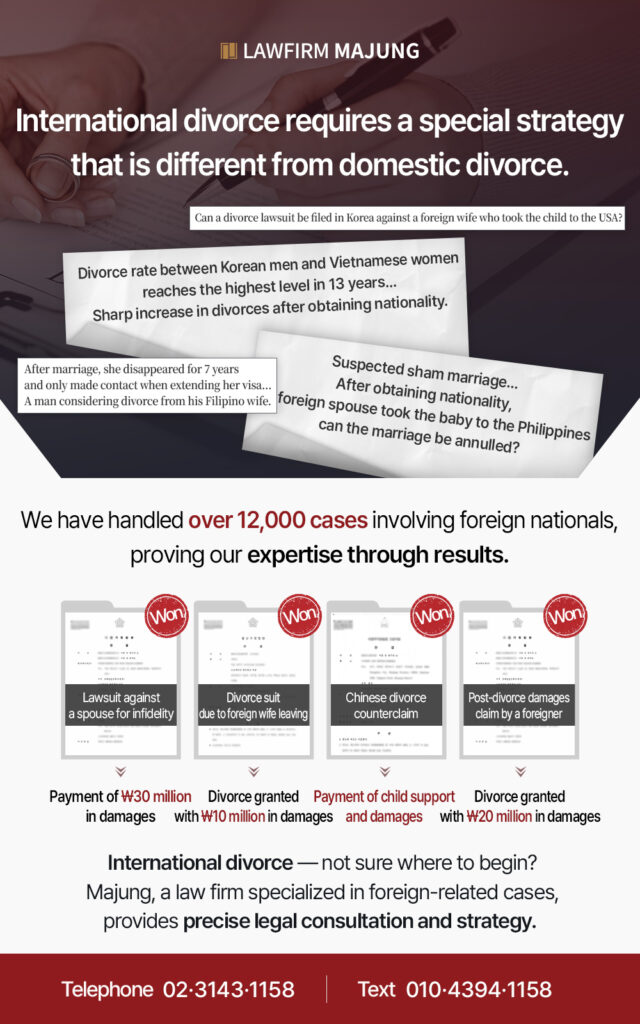
3. How Is Child Custody Determined?
When children are involved, custody becomes one of the most important issues in an international divorce.
Rather than focusing on the parents' nationality, Korean courts primarily consider the child's best interests. The court typically reviews:
Even if one parent has returned overseas or cannot be contacted, custody may still be granted to the parent who has been actively raising the child.
Child support should also be considered. Where the other parent resides overseas, additional international legal procedures may be required.
4. Property Division Is Based on Each Spouse's Contribution
Another important issue in divorce is property division.
Different nationalities do not change the legal standard for dividing marital assets.
If property was acquired during the marriage, the court considers not only whose name appears on the title but also each spouse's actual contribution. Assets that may be subject to division include:
If one spouse owns assets overseas, proving the existence and value of those assets may also become an important issue.
Property division, therefore, involves more than simply identifying ownership. The court also considers each spouse's financial contributions as well as non-financial contributions, such as household responsibilities throughout the marriage.
If children are involved, issues relating to custody and child support may continue. If there are jointly owned assets, property division proceedings may also remain pending.
In addition, the foreign spouse's immigration status or overseas residence may affect the required documentation, and procedures such as international service or service by public notice may take longer than in an ordinary divorce case.
By carefully reviewing your circumstances and preparing the appropriate legal strategy, you can reduce unexpected difficulties and move through the process more smoothly and efficiently.