
When you encounter unexpected legal issues in an unfamiliar environment, one of the most frightening consequences is problems with your immigration status.
In particular, when what seemed like a minor violation leads to immigration issues, anxiety about whether you might be required to leave the country can quickly grow. What matters here is not just the severity of the punishment, but also understanding what administrative decisions may follow afterward.
1. Forced Deportation of Foreign Nationals: What Criteria Determine It?
Forced deportation of foreign nationals is not determined solely by whether a crime has been committed. In practice, the decision-making process considers multiple factors, including:
- the nature of the violation
- length of stay
- ties and foundation of life in the country
- likelihood of reoffending
Even in cases involving the same type of incident, outcomes can vary significantly depending on the severity of the case, the level of remorse, and whether any damage has been remedied. Therefore, whether a foreign national is subject to deportation often depends less on “what the case is” and more on “how it is presented and addressed.” Additionally, immigration authorities assess not only the legal violation itself but also the overall appropriateness of continued residence, making it crucial to take a strategic approach from the very beginning.
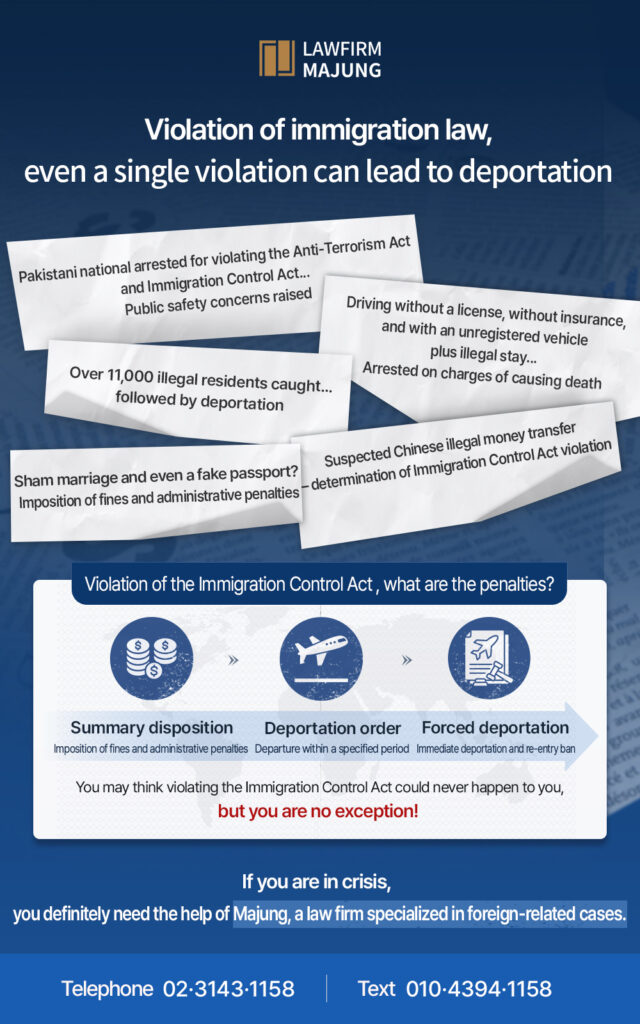
2. The Flow of Administrative Decisions Following Criminal Punishment
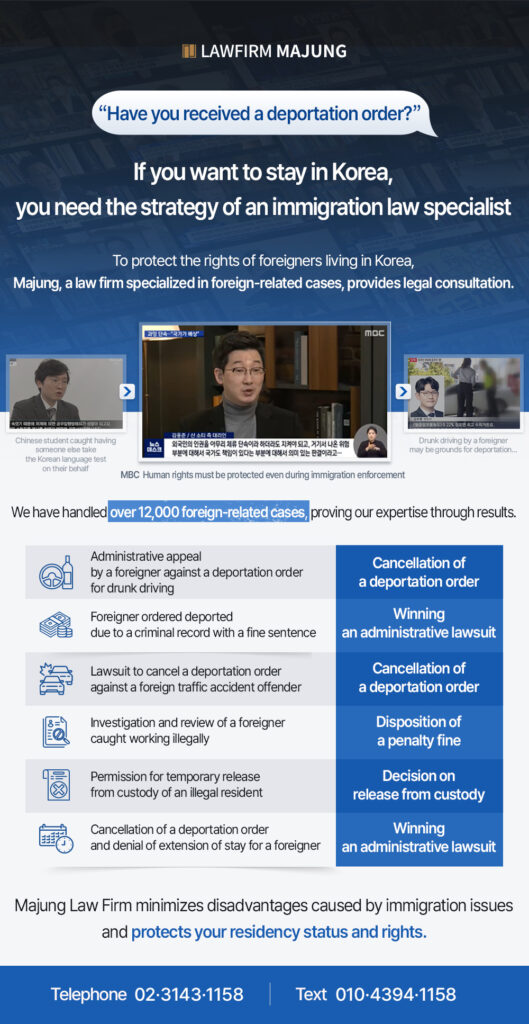
3. In What Situations Can a Departure Order Be Canceled?
Cancellation of a departure order is not possible in every case, but it can be sufficiently considered if certain conditions are met. Typical examples include:
- Having family ties within the country
- Having established a stable living foundation through long-term residence
- The severity of the offense being relatively minor
- Being able to demonstrate a low likelihood of reoffending
If these factors are recognized collectively, the decision may shift toward allowing continued residence. However, mere assertions are not enough. Objective evidence and logical explanations that support these claims must be provided together. In other words, what matters most in this process is how the materials are prepared and how they are structured and presented with the help of immigration lawyer.

4. Forced Removal vs. Departure Order: What’s the Difference?
In cases of forced deportation of foreign nationals, there are two main types of measures: a “departure order” and “forced removal.” A departure order provides an opportunity to leave the country voluntarily within a specified period, and is generally considered less disadvantageous. In contrast, forced removal may involve detention in an immigration facility followed by compulsory deportation, and it often results in a longer re-entry ban. Therefore, even in similar situations, the type of disposition imposed can completely change the course of one’s future. For this reason, it is crucial to establish a strategic approach from the early stages regarding how the case will be handled. Rather than simply waiting for an outcome, it is important to prepare with immigration lawyer in a way that can influence and potentially change the result.
5. Strategies for Responding to Forced Deportation: Key Points That Can Change the Outcome
In situations involving the forced deportation of foreign nationals, the most important point is not to view the criminal process and immigration matters separately. Because the outcome of the criminal case and the immigration decision influence each other, a response that considers both areas simultaneously is necessary. The way a case is handled at the criminal stage can affect the direction of the immigration decision. Moreover, in order to prevent forced deportation, it is not enough to rely solely on a simple statement of remorse or written explanation. Instead, it is essential to systematically organize:
- evidence of a stable life in the country
- family relationships and the need for protection
- economic activity and social ties
- plans to prevent reoffending
These materials should not merely be submitted, but must be structured in accordance with immigration decision-making criteria in order to have a meaningful impact.
6. The Strengths of Law Firm Majung