※ Majung Law Firm’s Foreigner Center is dedicated to protecting the rights of foreigners residing in Korea.
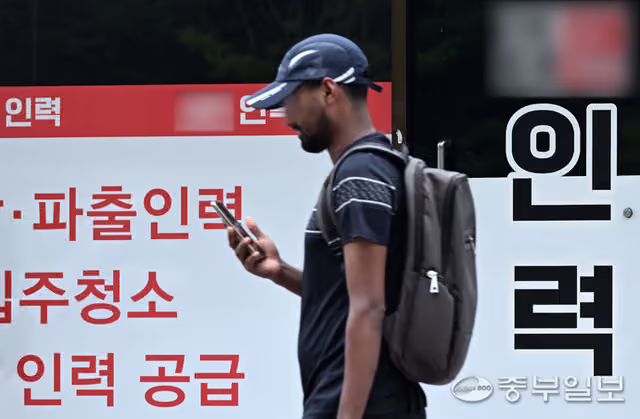
The business community criticizes the current law that defines dispatch in manufacturing as illegal, arguing it does not reflect reality, while labor groups voice concerns about ’employment instability.’
According to the Joongboo Ilbo’s coverage on the 2nd, under Article 5 of the Dispatch Act, ‘direct production process work’ (production line workers) at manufacturing companies like Arisel is not included in the permitted dispatch industries.
The Dispatch Act was established in the late 1990s as part of labor market flexibilization under the conditions of receiving IMF bailout funds.
Dispatch, as the term suggests, is a form of employment where a principal company temporarily borrows workers from a contracted staffing agency. In industries like manufacturing, where dispatch work is prohibited, it is considered ‘illegal dispatch’ if the principal company directly instructs the workers.
If a worker is employed as a dispatch worker for more than two years, the principal company must convert them to regular or indefinite-term employees.
When the Dispatch Act was created, there was a debate about including manufacturing in the dispatch industries, but it was initially allowed only in 26 industries due to opposition from labor groups.
Although the number of industries increased to 32 in 2007, manufacturing was not included. The decision made at that time remains in effect today, which is why Arisel, which has operated with many foreign day laborers, is now under suspicion of illegal dispatch.
Business Community: “Increased Labor Market Rigidity” Calls for Allowing Dispatch in Direct Production Processes
The business community continues to push for expanding the scope of dispatch industries. They argue that restrictions on dispatch industries cause labor market rigidity, making it difficult to drive production and investment to enhance corporate competitiveness.
In a May issue report, the KEF argued, “With the industrial environment changing rapidly, outsourcing labor is recognized as an essential management activity, but the dispatch system restricts this.” They called for reforms to expand the scope of dispatchable jobs.
Major OECD countries have broadly opened the scope of permissible dispatch work. In the U.S., there is no separate law governing worker dispatch, and the U.K. and Germany do not have specific restrictions on dispatch targets. Japan has allowed dispatch in manufacturing since 2003.
Following the Arisel incident, Minister of Employment and Labor Lee Jung-sik also stated at the National Assembly Environment and Labor Committee’s plenary session, “The dispatch system must operate realistically to meet global standards.” This has been interpreted as supporting the easing of restrictions on dispatch industries.
Labor Community: “Increase in Easy Dismissals and Non-Regular Employment” Constitutional Court Expresses Concerns About Expanded Indirect Employment
The labor community is concerned about employment instability. They worry that even if manufacturing companies rapidly increase dispatch labor to meet seasonal demand, it could lead to easy mass layoffs in a short period.
Han Chang-soo, director of labor safety at the Gyeonggi branch of the Korean Confederation of Trade Unions, stated, “Including core industries like manufacturing in the dispatch category risks significantly increasing non-regular employment.”
The Constitutional Court also expressed concerns in its 2017 ruling on the unconstitutionality of Article 5 of the Dispatch Act, stating, “It is difficult to conclude that conditions are sufficiently in place to prevent the adverse effects of dispatch expansion,” and “Allowing dispatch in core manufacturing processes could lead to expanded indirect employment, pushing many workers into poor working conditions and employment instability.”
Experts suggest that immediate legislative changes to expand dispatch industries are unlikely, but efforts to enhance accountability for both principal and dispatch companies in case of accidents are necessary.
Majung provides legal consultations for foreigners living in Korea who need legal assistance. Please contact us at the number below for more detailed consultations.
- Majung Law Firm Foreigner Center: 02-3143-1158
- Online Consultation: https://majungforeign.kr/contact/?lang=en